Best UK Opera Houses
Opera singing is undeniably the human voice at its most incredible. We’ve chosen a few prime locations to add to your Operatic bucket list – how many have you visited…?
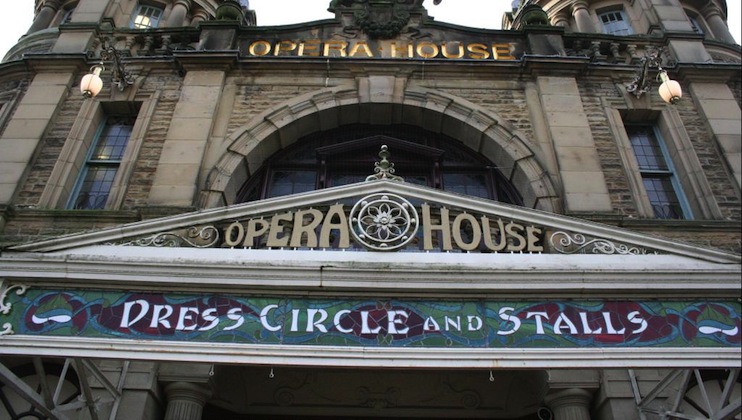
Glyndebourne, East Sussex
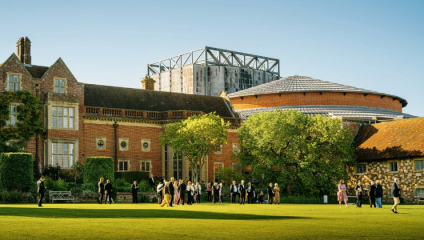
Set amid the rolling countryside of East Sussex, Glyndebourne Opera House is one of the world’s most celebrated opera destinations. The estate has belonged to the Christie family since the early 19th century, but its operatic story began in 1934 when John Christie and his wife, soprano Audrey Mildmay, staged the first season of what would become the Glyndebourne Opera Festival. In 1994, a new purpose-built opera house replaced the original building, seamlessly combining modern design with the surrounding landscape while retaining the famously warm and detailed sound.
Running almost every summer since its founding (with a wartime pause), the Glyndebourne Opera Festival is renowned for its artistic rigour, long rehearsal periods, and consistently high production values. Mozart has long been central to its identity, with regular performances of The Marriage of Figaro, Don Giovanni, and Così fan tutte, alongside major works by Handel, Verdi, Wagner, Strauss, and Britten. As well as an Autumn program running from October through to December, Glyndebourne is known for championing contemporary opera and new commissions, as well as for nurturing young talent through its chorus and training programmes.
A visit to Glyndebourne is as much about the experience as the performance. Audiences famously enjoy extended intervals picnicking on the lawns (champagne in hand) or dining in the elegant restaurant before returning to the auditorium. Combining exceptional opera with the elegance of an English country estate, Glyndebourne offers a cultural experience unlike any other in the UK.
Buxton Opera House, Derbyshire
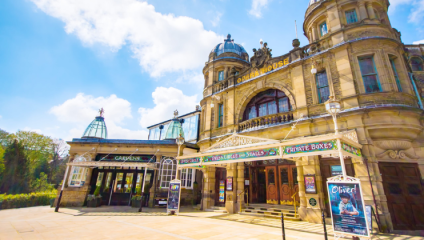
Designed by the celebrated theatre architect Frank Matcham and first opened in 1903, Buxton Opera House is one of the finest surviving examples of an Edwardian theatre in the UK. Despite periods of decline in the mid-20th century, the building was saved from demolition and lovingly restored, reopening in 1979 as a major regional producing and receiving theatre and preserving Matcham's elegant design with its richly-decorated auditorium, excellent sightlines and acoustics.
Today, Buxton Opera House presents a lively, year-round programme of around 450 performances annually, encompassing opera, classical and contemporary music, ballet, musical theatre, drama, comedy, and family shows. Opera remains central to its identity, particularly through its close association with the Buxton International Festival, which takes place each July. Founded in 1979, the festival has earned a reputation for adventurous programming, championing lesser-known operas alongside bold new interpretations, as well as a parallel programme of classical concerts, jazz, book events, and literary talks.
Set against the dramatic landscapes of the Peak District, Buxton Opera House offers a distinctive operatic experience—one that blends architectural grandeur, artistic ambition, and the charm of a historic spa town at the edge of some of England’s most beautiful countryside.
Theatre Royal, Glasgow
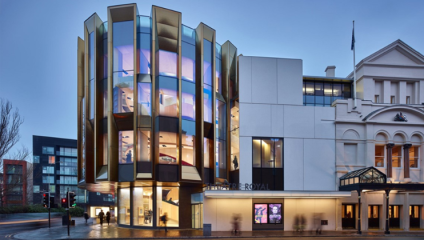
Theatre Royal, Glasgow is one of Scotland’s most important historic opera houses and a central pillar of the city’s cultural life. First opened in 1867 and redesigned in 1895 by renowned theatre architect Charles J. Phipps, the building was conceived as a serious lyric theatre, capable of hosting large-scale opera and ballet, with its Its grand auditorium, excellent acoustics, and elegant Victorian detailing.
A major internal refurbishment in the late 1970s ensured the Theatre Royal could meet modern technical and audience expectations while preserving its historic character. The restoration carefully upgraded stage technology, backstage facilities, and public spaces, while retaining key period features such as ornate plasterwork, sweeping balconies, and the intimate horseshoe-shaped auditorium. The result is a venue that feels both richly historic and fully equipped for contemporary opera production.
Today, the Theatre Royal is best known as the principal home of Scottish Opera, which has been based there since 1974. Founded in 1962, Scottish Opera presents an ambitious programme ranging from core repertoire by composers such as Mozart, Verdi, and Puccini to contemporary works and new commissions. Alongside opera, the Theatre Royal also hosts Scottish Ballet, touring productions, concerts, and special events, making it a lively, year-round cultural hub.
Longborough Festival Opera, Gloucestershire
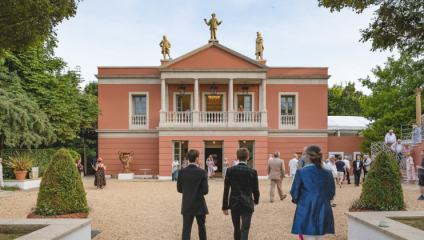
Tucked away in the rolling countryside of the Cotswolds, Longborough Festival Opera is one of the UK’s most distinctive and intimate opera venues. Founded by Martin and Lizzie Graham, the company began life in 1991 staging performances in a converted barn on the family farm, before the purpose-adapted theatre opened in 1996. With seating for around 500 people, including salvaged seats from the Royal Opera House during its 1990s refurbishment, Longborough offers a uniquely close relationship between performers and audience, with acoustics carefully tailored to enhance unamplified voices and orchestral sound.
From its earliest days, Longborough has been driven by an ambitious artistic vision, and the festival quickly gained attention for the quality of its productions and its commitment to long rehearsal periods—an approach more commonly associated with major international opera houses. In 2000, Longborough launched its Wagner programme, gradually building towards complete cycles of Der Ring des Nibelungen, a remarkable achievement for a venue of its size and one that firmly established its international reputation.
Today, Longborough Festival Opera runs annually from late spring into summer, presenting a carefully curated programme that balances major operatic works with lesser-known gems. While Wagner remains central to its identity, recent seasons have featured operas by Mozart, Verdi, Puccini, Janáček, and Britten, alongside concerts and recitals. As with Glyndebourne, a visit to Longborough is about more than the performance itself: audiences are encouraged to picnic in the surrounding countryside, soaking up sweeping views of the North Cotswolds before returning to the auditorium. Intimate, ambitious, and passionately run, Longborough Festival Opera stands as a powerful reminder that world-class opera can flourish far from the UK's urban centres.
The Lowry, Salford
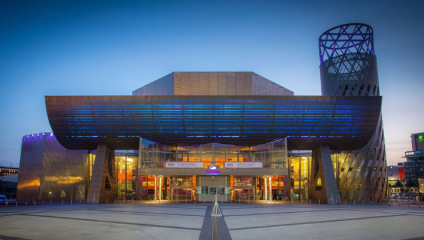
Set on the waterfront at Salford Quays, The Lowry has established itself as one of the North of England’s most important venues for opera. While Manchester’s Opera House is now largely focused on large-scale musical theatre and commercial touring productions, opera enthusiasts are far more likely to find ambitious, artistically driven work at The Lowry. Opened in 2000, the venue is a purpose-built, contemporary arts centre designed to host major performance across multiple discipline.
Opera plays a central role in The Lowry’s programme through its close relationship with Opera North, which made the venue its main Salford base in 2011. Performances take place in the Lyric Theatre, a large, acoustically refined auditorium well suited to full-scale opera productions. Here, audiences can experience everything from classic works by composers such as Verdi, Puccini, and Mozart to contemporary opera and bold reinterpretations, making The Lowry a key destination for high-quality opera outside London.
Named after the artist L. S. Lowry, who lived and worked locally, the centre also reflects a broader commitment to culture across visual art, theatre, dance, and music. Operated as a registered charity, The Lowry supports creative participation and artistic development alongside its performance programme. Combining modern architecture, a strong operatic focus, and a prime waterside setting, The Lowry has become the natural home for serious opera in Greater Manchester and an essential stop on the UK’s operatic map.