Interview: Artistic Director Michael Walling
Meet Michael Walling, the visionary Artistic Director behind Border Crossings. Michael reflects on how his pioneering theatre company has spent 30 years breaking down barriers...
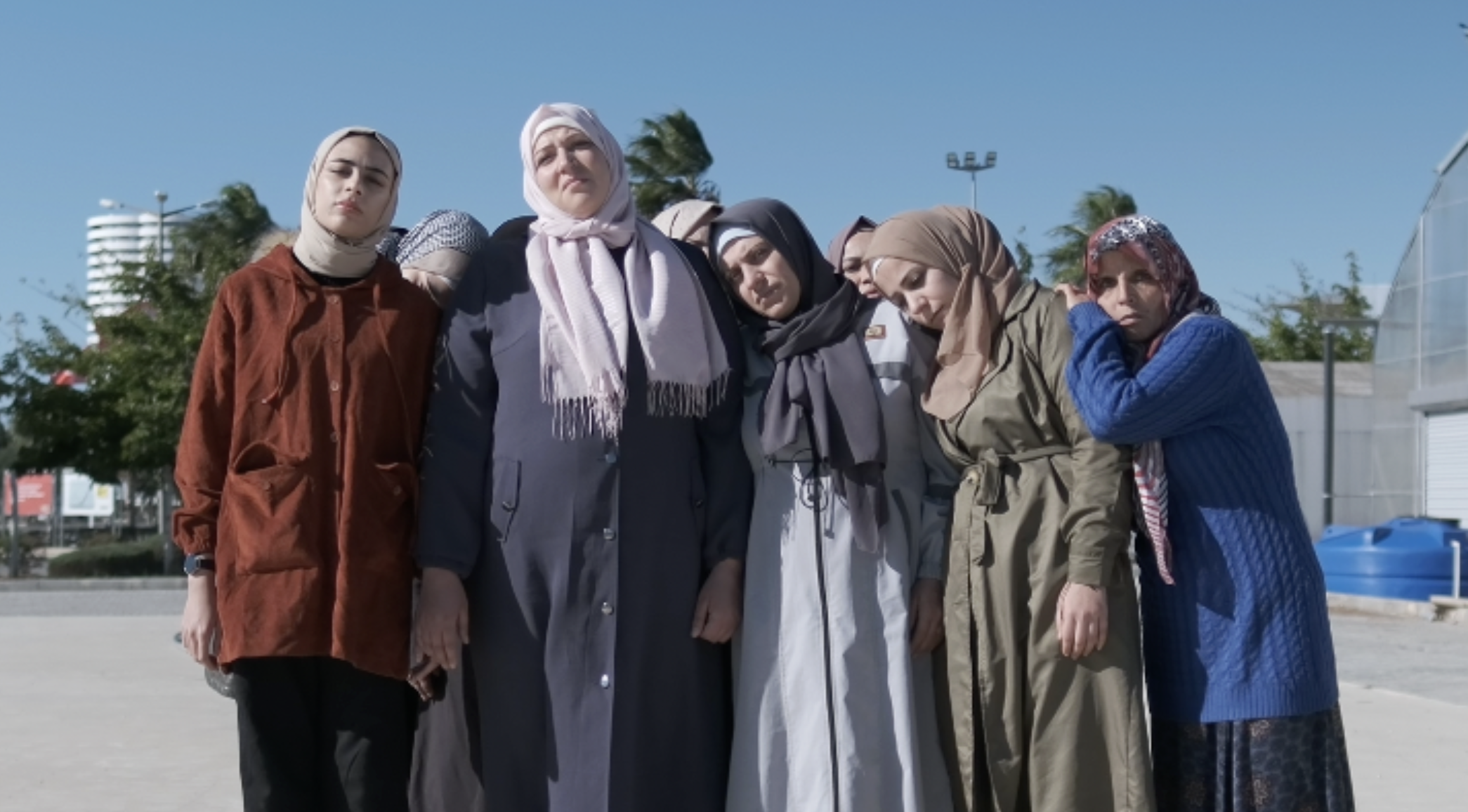
Hi Michael! What first inspired you to found Border Crossings in 1995, and how has that original vision changed over time?
What originally catalysed the company’s creation was my experience of cultural tensions in the US, when I was directing ROMEO AND JULIET there in the early 90s. It was not long after the police attacks on Rodney King, and I’d reflected some of the racial issues that were prevalent by casting a Black performer as Juliet, and other Black people as her family. Romeo was white, of course. The hate mail and the death threats were pretty scary - even more so when the arms cache was discovered… But I thought that if I was upsetting people who think like that, I was probably doing something right.
So I set up a company devoted to building bridges between people who come from very different backgrounds, creating theatre which generates empathy and understanding. I think that original vision remains pretty much intact 30 years down the line. What has changed is that it’s even more important now than it was back then. The current political moment is staggering in the depth of its polarisation and the ugliness of its othering. We have to find ways in which people can share space: it’s really, really urgent.
How can ancient stories like SUPPLIANTS OF SYRIA help us understand modern geopolitical struggles in 2026?
SUPPLIANTS OF SYRIA is based on the fact that a play written in 463 BC begins with the lines: “God of sanctuary, grant us asylum. We are women of Syria.”
Not much seems to have changed there! 5th-century Athens was dealing with questions around wars in the Eastern Mediterranean, displaced people crossing the sea, and the admission of asylum seekers. So, the ancient story gives us an analogy to our own time and to the situation of the Syrian women with whom we worked. What’s useful about this in the making of political theatre is that it gets us away from the pettiness and personal agendas that constantly obscure the bigger picture in our current debates. No Robert Jenrick or Recep Tayyip Erdoğan here…
And so that takes us towards a theatre that acknowledges the bigger picture and gets us away from the poisonous rhetoric of othering and nationalism that is rooted in fear. What is currently being enacted in the waters of the Mediterranean and La Manche needs to be seen as a kind of sacred drama: the ritual sacrifice of those Fanon called “the wretched of the Earth”, fleeing from and then again encountering systemic cruelty. By mythologising this, by recognising what is holy in these drownings, by acknowledging that this drama is inherently European, is our own, we can perhaps help begin the necessary process of shifting popular perceptions away from the sordid mundanity of the prevailing dehumanising discourse.
The other really important thing about Aeschylus’ SUPPLIANTS is that it’s the first text ever to mention the word “democracy”. Athens was inventing democracy at the same time as inventing theatre, and the two things are intimately related. Their theatre was like a maintenance system for democracy, a way of ensuring that debates were happening at a level that was actually meaningful and helpful for social development and for justice. Which meant participation.
Greek democracy was emphatically NOT about elections - we’ve got to the point where we think the two things are synonymous, but actually they’re opposites. How can you have participatory governance when every few years, a bunch of rich people spend a fortune on advertising so they can get to rule you? That’s why the Greeks thought of elections as part of an oligarchy. So we’re able to use the frame of this Greek play as a means to get a genuinely participatory debate. In our theatre space at Hoxton Hall, refugees will sit down with councillors and social workers and police and educators, and we’ll all address these big questions together.
Your work has touched on many continents and across many time-periods. How do you approach cultural relevance?
It’s to do with who we work with. We often collaborate closely with really extraordinary artists from overseas, and that makes listening to them and accepting that they know more about their own culture than we do really essential. So that makes cultural relevance something that’s built into the process. In the case of SUPPLIANTS OF SYRIA, and increasingly in our work these days, it’s not just a case of cross-cultural collaboration, but actually collaborating with people who are on the very edges of society and are not necessarily professional artists, but who are experts in their own lives.
When you’ve got a society that has totally lost its moral compass - and that’s where we find ourselves - then you can’t trust the big arts institutions to make top-down work that is somehow “relevant” and will “land” like an imperialist ship on a foreign shore. You’ve got to start from ground level and build up. So activism and community building and engaging people who have been excluded - this long-term painstaking work that has led us towards this show is the reality of genuinely creative practice in our time.
This new performance, with its inclusion of the excluded and its openness to debate and creative possibility, makes a different sort of space, where people aren’t just labelled and condemned because of the label, but where we recognise that not every response to crisis has to be negative or violent. The relevance is in the engagement, the presence, the openness.
The show blends filmed testimonies with live performance. How did you navigate the ethics of representing real voices?
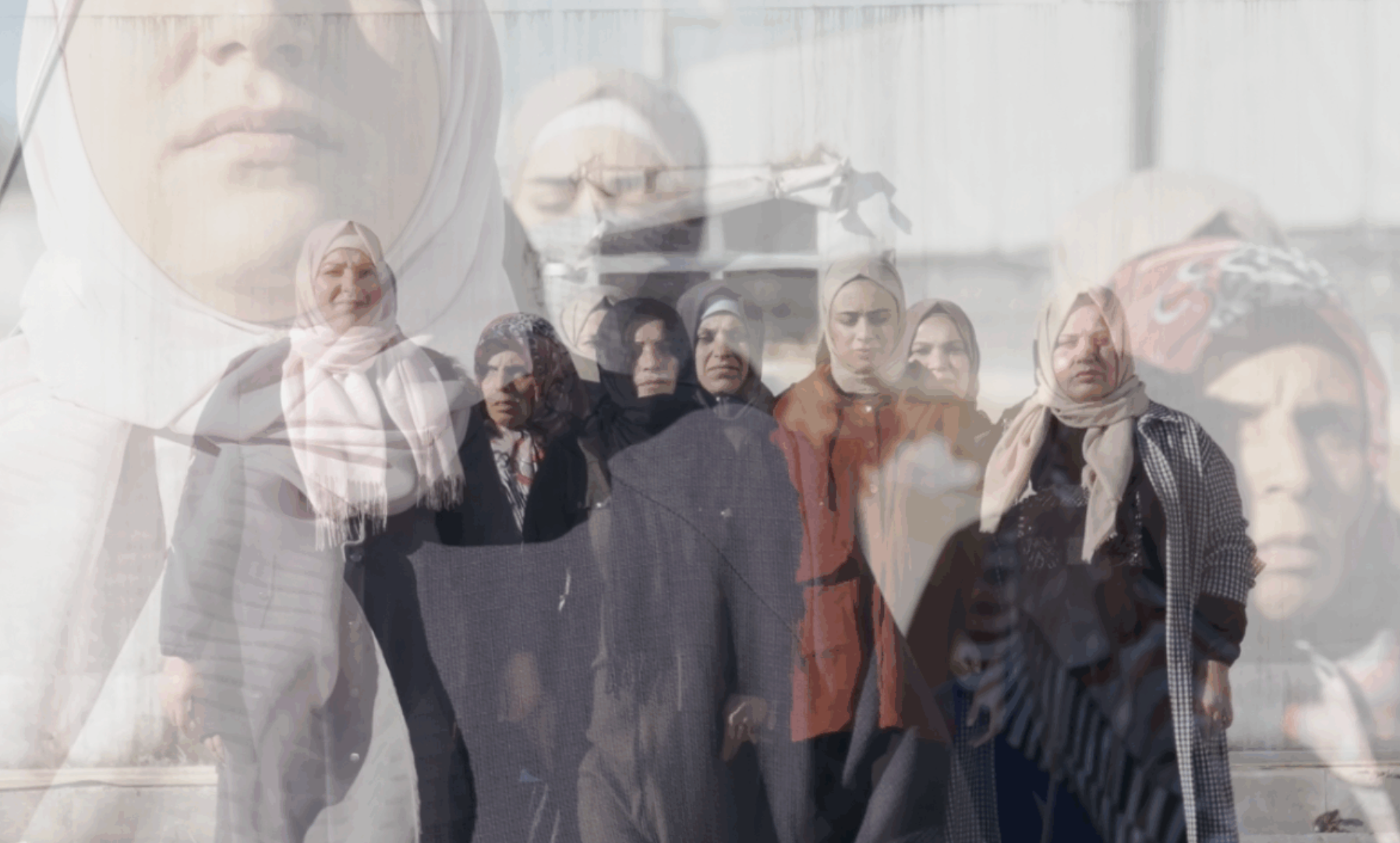
When Lucy Dunkerley and I first arrived in Turkey, we knew we wanted to engage with a group of women from Syria, but we were also concerned about how we could make that engagement. I think it’s really important that we had to go there before we could even begin to tackle the ethics. You can’t make these moral choices online, remotely: you have to make your morality on a human level, in the same room. Once our friend Asli Ilgit from Çukurova University had identified the Meryem Women’s Co-Operative as the most suitable partner, it was actually quite easy to negotiate an ethically coherent way for them to collaborate with us.
So often there is a dilemma over payment for vulnerable people in arts projects - do you pay them and so seem to be buying their misery, or do you not pay them and so seem to be exploiting them? But the Co-operative just said, “Yes, we recognise the value of this work for our participants and the importance of their voices being heard, so we will treat their work with you as we treat their work in our bakeries, gardens and so on, which means we will pay them to do it.”
The other very challenging thing in theatre work with people who have been traumatised is that it can be upsetting or psychologically damaging to revisit the past, and for that reason, we started off very carefully in our interviews with the women. But it soon became very clear that, for them at least, the political overrode the personal, and they really, really wanted their voices to be heard. They hadn’t told their stories to each other; in many cases, they hadn’t told their own families, but the presence of these foreign theatre-makers and their camera meant that they had a structured space to speak, and a sense of an audience waiting for their words. So the ethical imperative actually passes to us and to our audiences here in London - that we listen with care and positivity to what they have to say. And that we act upon it.
What’s exciting you in the cultural landscape right now? What have you been drawn to recently?
Over Christmas, I read the Booker winner - FLESH by David Szalay. I couldn’t put it down. It’s been talked about as if it’s a re-assertion of the male voice in a literary world dominated by women, but that didn’t seem to me to be the crucial thing about it. For me, it was about the arbitrariness of how we live right now - the series of accidents that can constitute a life. And so about a profound vulnerability.
In theatre, the most powerful piece I’ve seen recently was Tiago Rodrigues’ BY HEART at Battersea Arts Centre. A profound meditation on memory, cultural memory, and the treasuring of what is meaningful. At the end, Tiago, who had been performing in his third language all evening, went into his native Portuguese to recite Shakespeare’s Sonnet 30. The man sitting next to me, who was himself Portuguese, suddenly started to shake and weep uncontrollably. Really deep sobs from the depths of his soul. I actually had to hold onto him, which isn’t something that happens very often…
As soon as it came out, I bought the beautiful collected edition of SEAMUS HEANEY. I open it almost every day and make a journey back and forth between familiar and less familiar poems and the scholarly commentary that gives them new resonances and layers of meaning through the understanding of contexts, both Irish and global.
All of these beautiful works manage to create safe and sacred spaces in which we can share the terrible anxiety of disconnection that characterises our self-centred, post-existential age, and through that very sharing paradoxically reach a point of actual connection on an emotional level: a connection which might start to lead us towards a differently imagined politics.
SUPPLIANTS OF SYRIA is performing at Hoxton Hall from Tue 3 Mar - Sun 8 Mar 2026
Book tickets here.