Interview: illustrator Monika Beisner
Monika Beisner is a German illustrator who first came to London fifty years ago; we sat down to hear her story and get her unique take on life, art, the city and more
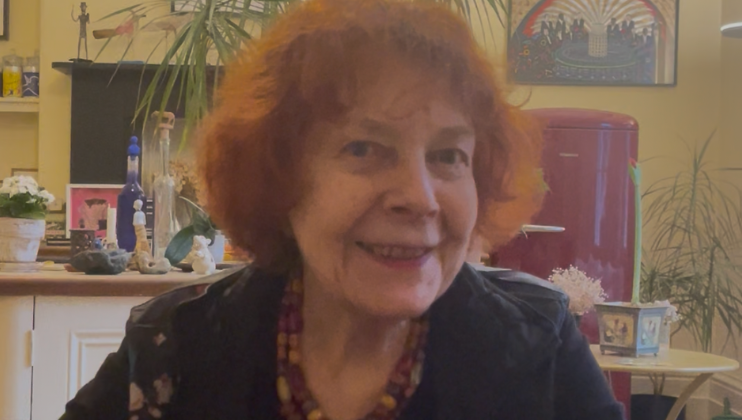
Hi Monika! So, what's your story?
Well, I'm alive, as you see!
I was born in Germany but I've been living here since 1966. At first I had a German academic exchange grant to study at the Slade School (of Fine Art). I was here for a year and then I wanted to go to New York but I couldn't do that so quickly.
So I went to the art school in Berlin and then I got a Fulbright grant to New York; I stayed in New York for two years and my first illustrated book was published in 1970 or ‘71, something like that.
I studied painting but all my studies also were not so normal. I always did what I wanted anyways, so I mostly worked at home but at the time my tutor was Ron Kittaj - do you know this one? Ron Kittaj a wonderful American painter who lived in London and he was a tutor - he was really wonderful because he didn't ask, for example, “Why do you paint green here?” and [talk about] the shape and so on. He asked: “Why do you paint what subjects you paint and what do you want to say?” So it's not just making nice blobs on the canvas.
At that time I went with my then-boyfriend to the Greyhound races there, and in those days I did a lot of drawings - quite big drawings. Of course, very influenced by David Hockney, and strangely enough Frances Bacon, which is very unlike me.
Yeah, I went to New York and I decided that I’m not a painter. I was always interested in text.
I started to write little stories and illustrate them and at home - you know, not at an art school. Then I had an exhibition, and then I got a commission to illustrate, and from then on my illustration career took off!
What subjects do you find yourself returning to in your art?
The thing is, I was always interested in the imagination.
I never did anything about, you know, the real life of father, mother [and] children - there was a time in children's books, the father would look after the children and the mother would walk and that sort of thing in children's books.
No, I did about the star constellations. There are lots of animal constellations and I found texts - old texts - that tell the stories why these constellations are in the sky.
Then I did charms and spells, I collected charms and spells - I mean real ones…A book of riddles, because riddles are a wonderful form of poetry, you know, rhyming riddles, and then fabulous beasts, so always things that have to do with the imagination. So you are presented with things that in ‘reality’ - so-called reality - are not there. They are there in my books, and they are very real.
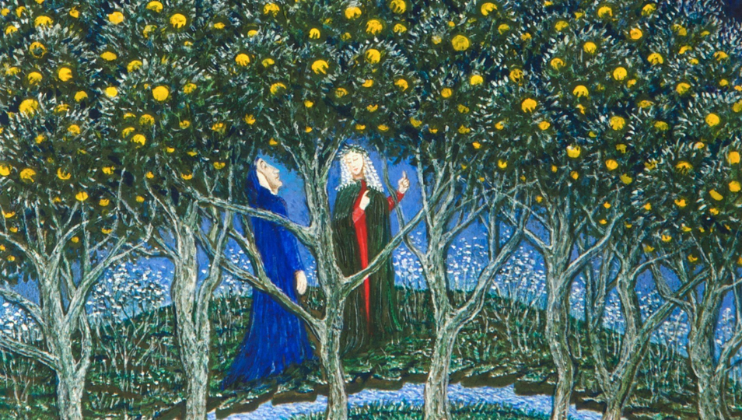
I haven't done children's books now for 25 or so years, because I then did Dante's Divine Comedy - The whole of Dante's Divine Comedy. It has 100 images, and I illustrated the whole thing. It took me seven years. But again, Dante's so-called journey is also in the imagination. It deals, of course, with philosophical and religious and real things, politics of his time, and human nature, especially. It's amazing how he can express his thoughts in this wonderful poetry.
What culture is calling you?
It's interesting because I'm not an English artist and, in art, there is a difference; Modernism…Humanism, for example, has not really happened here.
I'm interested in contemporary music. It always takes, I don't know, ten years until a famous composer from classical contemporary music comes here.
My cultural roots are mostly in Europe, but I live here and I don't travel much. Yesterday I was at the Courtauld, there was this exhibition by Wayne Thiebaud. He was American, and he painted cakes, for example, or these machines to drop gum…wonderful. I go there a lot now and, I mean, that has changed here too. Now they show international art much more, and also now they show Black artists and also women artists.
It has really changed, you know, so that it's not just this little group of ‘in’ people -in that sense it's good.
What does London mean to you?
When I first came here, it was the so-called ‘Swinging London' - it passed me by, because I was so happy to work, to do my drawings and my paintings, and I went to museums.
I grew up after the war, and in my small town, there was nothing, (4:26) So it was really wonderful to see museums. (4:33) So I didn't go to Carnaby Street, but of course afterwards I found out what happened here.
I didn't take part in all these pop things but, strangely enough, afterwards here in England I published this book called ‘The Heavenly Zoo’ about the star constellations and it was published by Eel Pie Publishing - it was Peter Townsend from The Who who created that little publishing house, and he was so generous.The stories [in the book] were re-told by Alison Lurie, this American, a wonderful and famous writer, and he had her flown in for the book launch and then we were invited to the Who concert at Wembley. I lived with my boyfriend at the time in Chelsea, so we went to this Who concert and it was so loud! We sat in the Royal box - Hans had sat next to Bianca Jagger - but it doesn't impress me at all - but it was an incredible experience and I had headaches three days after it was so loud!
Yeah, I lived in Chelsea with my former partner. In the beginning it was lovely; it had real shops, you know, like vegetable shops and bakeries and so on, but now I think it's horrible; [with] all these shops it's just a ‘rich people's ghetto’ - not quite like that, but it is really, you know, it changed so much. We lived there for about 25 years.
Now, I live in North London - it's more diverse, you know, because Holloway Road, for example, is very different from Upper Street, you know, and I'm so fortunate to have this wonderful flat looking out into trees and on the other side is also trees, so this flat is my little haven.
Do you feel independent?
I mean, I was really lucky. All my books, I could do what I wanted. I usually proposed the subject, and sometimes the publisher gave me a story. I mean, my first book was a commission.
I’m fortunate [that] I can, and still, work. I always earn money through my books. If you're ill you can't work, and I'm fortunate.
It is all very strange, you know, how life is. You know, I must say I feel so far I had a lovely life, because I really can do my work.
Do you have anything to promote?
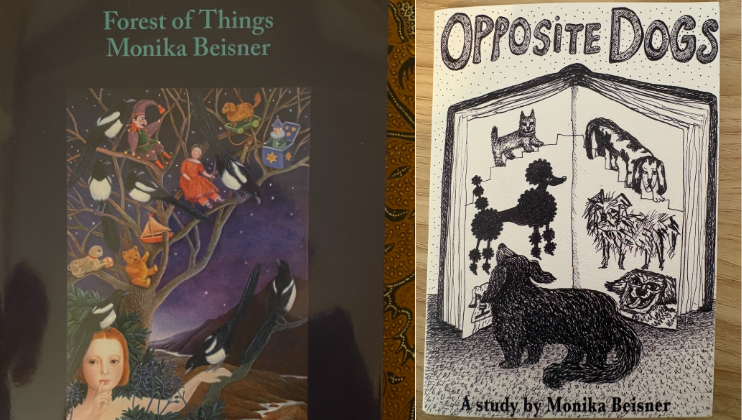
Oh, my book, ‘The Forest of Things’ - that's the only book I published myself, because it was impossible for a publisher to do it; I had to work with a designer page by page, and I was interviewed with Robert Bush, my friend, for a year, and then we had to transcribe it. That book contains all my work.
On the other hand, my latest new little book, because that just came out - this is so funny, because I found it, these drawings are about, I don't know, 30 years old - I’ll give you a copy of that.
Thanks!