Interview: Kathak Dancer & Choreographer Urja Desai Thakore
Urja is an acclaimed kathak dancer and founder and Artistic Director of Pagrav Dance Company, which last year celebrated 20 years
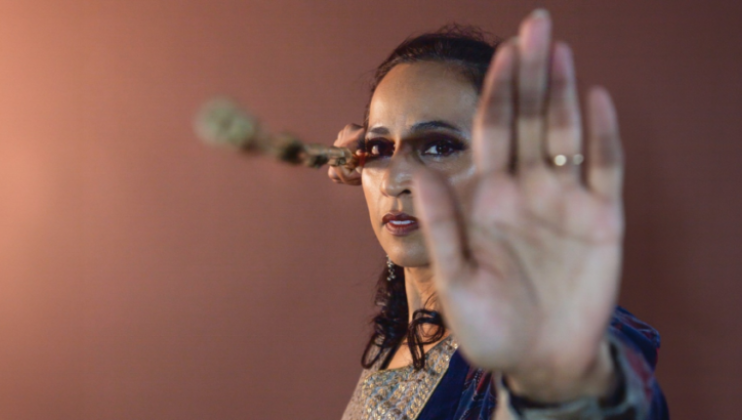
Hi Urja! What's your story?
I’ve been learning Indian classical dance since the age of six, when I was growing up in India.
Before Kathak, I was actually learning another classical dance form, Bharatanatyam, when I was about four years old. I don’t remember much of it, but my mum always says, “You loved dancing, but you were very naughty in class!” I mean… I don’t know what she expected from a four-year-old!
My mum used to take me to performances by legendary artists, and she had this habit of taking me backstage afterwards to receive blessings from great gurus. On one such occasion, the legendary Kathak artist Sitara Devi looked at me and said, “This girl will do great work in Kathak. She will have great recognition in this field.”
My mum replied, “But she’s learning Bharatanatyam,” and Sitara Devi apparently said, “No , she should learn Kathak.”
That moment stayed with my mother, and she began looking for a Kathak teacher for me in Ahmedabad. Eventually I began training at Kadamb, founded by the incredible Kumudini Lakhia ji, and predominantly learned under Sandhya Desai. Kumiben, as we lovingly called her, played a huge role in shaping my artistic journey.
At that stage, though, I actually wanted to become a doctor.
My mum kept saying, “You are not made for medicine , you are made for the arts.” Which was quite unusual in an Indian family, because normally it’s the opposite! But my family genuinely encouraged me to pursue the arts professionally. Of course, like many children, I didn’t listen.
I went away to study civil engineering, and during those years I realised how deeply I missed dance. Even while studying, I kept dancing wherever I could. That’s when I understood that dance wasn’t simply something I did , it had become part of who I was.
Since then, I genuinely cannot imagine myself not dancing.
By the age of 21, I had begun training and performing more seriously with my Guru's company.
Pagrav Dance Company was originally established by my mother and her sisters in India in the early 1980s. Over time the work became more occasional, and then I re-established the company in the UK in 2005 after moving here.
Since then, it’s been an incredible journey. The organisation has evolved hugely, from performances and training to becoming a charity and an Arts Council England National Portfolio Organisation. But more than that, my own understanding of dance, community, and the role of art within British cultural life has evolved alongside it.
For those unfamiliar with Kathak, how would you define it as a style?
Kathak is a North Indian classical dance form.
It has intricate footwork, rhythm, spins, storytelling, musicality, and a very deep relationship with live music. If I had to explain it to someone unfamiliar with Indian dance, I often say it’s like ballet and tap dancing meeting each other but danced barefoot.
In Indian classical dance, dancing barefoot is very important. For me, it feels like a connection from the sole to the soul. Historically these dances were performed in temples, so footwear was never worn.
There are so many ways the feet interact with rhythm, and a huge amount of coordination between the feet, hands, eyes, expression, and body.
There are similarities with ballet in posture and elegance, but Kathak has its own completely distinct vocabulary and philosophy.
What I love about Kathak is that it carries both precision and freedom. It can be deeply mathematical and deeply emotional at the same time.
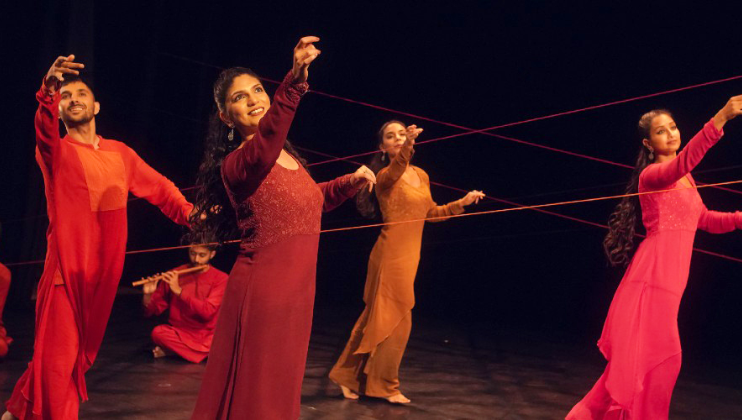
You live in Milton Keynes and work between there and London; what do those places mean to you?
The company is based in Milton Keynes, but we also work extensively in London and have students in both places.
When I first moved to the UK after getting married, Milton Keynes became home very quickly. I still remember when I submitted one of my first Arts Council applications years ago and someone jokingly referred to Milton Keynes as a “desert of art.” I remember thinking very clearly: “No I want to change that.”
So there has always been a conscious effort from my side to contribute artistically to the city and build something meaningful here.
What I love about Milton Keynes is the space both physical and mental space. The lakes, parks, openness, architecture… there’s room to think. I find nature incredibly inspiring.
Because of my engineering background, I’m also very interested in architecture and structure, and I think that influences how I choreograph and build movement.
At the same time, London gives me something completely different.
London is where I can lose myself.
I can get lost in the pace of the city, lost in the studio and the work, and lost in conversations with friends, collaborators, artists, and students. There’s always energy and possibility there.
So I feel very lucky living in Milton Keynes but working in London gives me the best of both worlds. I can access the intensity of London while still returning to a place that grounds me.
What culture is calling you?
That’s such an interesting question, especially because our upcoming work is also asking similar questions around identity, belonging, and who we are.
For me, culture is not something restrictive. It gives roots, grounding, and a sense of belonging but it should also give you the confidence to grow, question, and evolve.
I never feel culture should trap us inside one rigid mould.
I’m inspired by many things, not only Indian classical arts. I watch performances, exhibitions, films, architecture, music everything feeds the imagination in different ways.
Interestingly, when I watch work, I often become clearer about what I don’t want to do. I’m usually very certain about that. But what I do want remains open and evolving.
Recently I revisited His Dark Materials, which I found incredibly imaginative. I also watched Dead Poets Society again with my daughter, and I absolutely loved it.
And I’ve been very inspired by the work of Crystal Pite. Even the small glimpses I’ve seen of her choreography are extraordinary. The scale, humanity, and movement language really intrigue me.
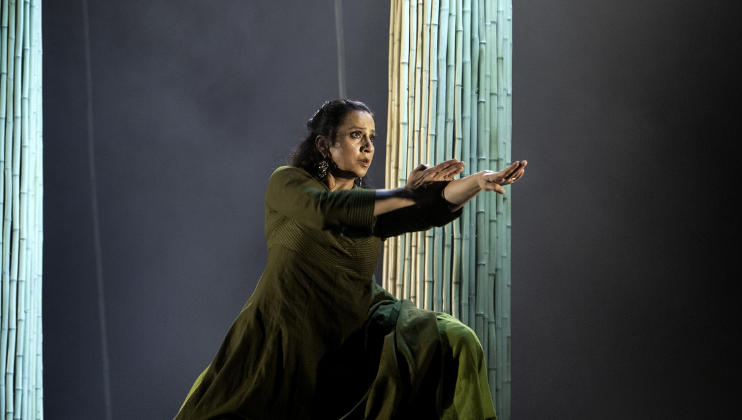
Do you have anything to promote at the moment?
We are currently developing a very ambitious new work called Khoj.
It’s a large-scale production involving 12 dancers, and I’m collaborating with the incredible multimedia artist Hetain Patel.
At the centre of the work are questions around identity, expectation, society, and the versions of ourselves we perform for the world.
The work is commissioned by Sadler's Wells and The Lowry, and we’re hoping it will also form part of Milton Keynes’ 60th year celebrations.
It’s probably one of the most ambitious things we’ve attempted so far, and I’m very excited about where it’s heading.
People can follow the journey through Pagrav Dance Company or on Instagram.